
For adults 65 and older, staying physically active is one of the most direct ways to protect health, maintain independence, and feel strong day to day. Yet many seniors (and the families who care for them) aren’t sure what a realistic activity plan of physical activities for seniors actually looks like.
The good news: the guidelines are clear, the options are varied, and getting started is more accessible than most people think. Here’s what older adults need to know about weekly physical activity and how The Courtyard at Loves Park supports an active lifestyle every day.
What the Experts Recommend for Weekly Physical Activity
According to the Centers for Disease Control and Prevention (CDC), adults 65 and older should aim for:
- At least 150 minutes of moderate-intensity aerobic activity per week, or 75 minutes of vigorous-intensity aerobic activity
- Muscle-strengthening activities at least two days per week
- Balance activities at least three days per week
That breaks down to about 30 minutes of moderate movement five days a week. For those who prefer higher-intensity exercise, 75 minutes of vigorous aerobic activity provides comparable health benefits.
Not every senior will meet these targets right away, and that’s okay. Even light daily movement is better than staying seated for long stretches. The priority is consistent activity that fits each person’s current abilities.
The 4 Types of Physical Activity Seniors Need
Staying healthy with age isn’t about a single type of exercise. A well-rounded weekly routine of physical activities for seniors typically covers four categories.
Aerobic Exercise
Aerobic activity gets the heart pumping and the lungs working. For moderate intensity, the target is a pace where speaking is possible but singing along to music is not. For vigorous intensity, only a few words at a time are possible without catching your breath.
Examples of moderate aerobic physical activities for the elderly include:
- Brisk walking
- Water aerobics
- Cycling on a stationary bike
- Light hiking
- Dancing
In Loves Park, Illinois, outdoor options abound. Sportscore Two, a local recreational complex just minutes from The Courtyard at Loves Park, offers walking paths and outdoor space well-suited to moderate daily movement. Swanson Park and nearby trails along the Rock River also provide accessible settings for regular walks.
Muscle-Strengthening Activities
The CDC recommends muscle-strengthening work at least two days per week, targeting all major muscle groups including the legs, back, abdomen, arms, and shoulders. Seniors should aim for eight to 12 repetitions per exercise, working to the point where completing another repetition without rest would be difficult.
Options include:
- Free weights or resistance machines
- Resistance band exercises
- Bodyweight movements such as sit-to-stands or modified push-ups
- Yoga postures that engage core and leg muscles
- Gardening tasks like digging or shoveling
Balance Training
Falls are one of the leading causes of injury among older adults. Balance training directly reduces that risk by building stability in the ankles, knees, and core. Activities that improve strength in the legs and abdomen also contribute to better balance over time.
Balance exercises worth trying include:
- Standing on one foot while holding a chair
- Walking heel-to-toe in a straight line
- Tai chi
- Yoga
- Using a wobble board
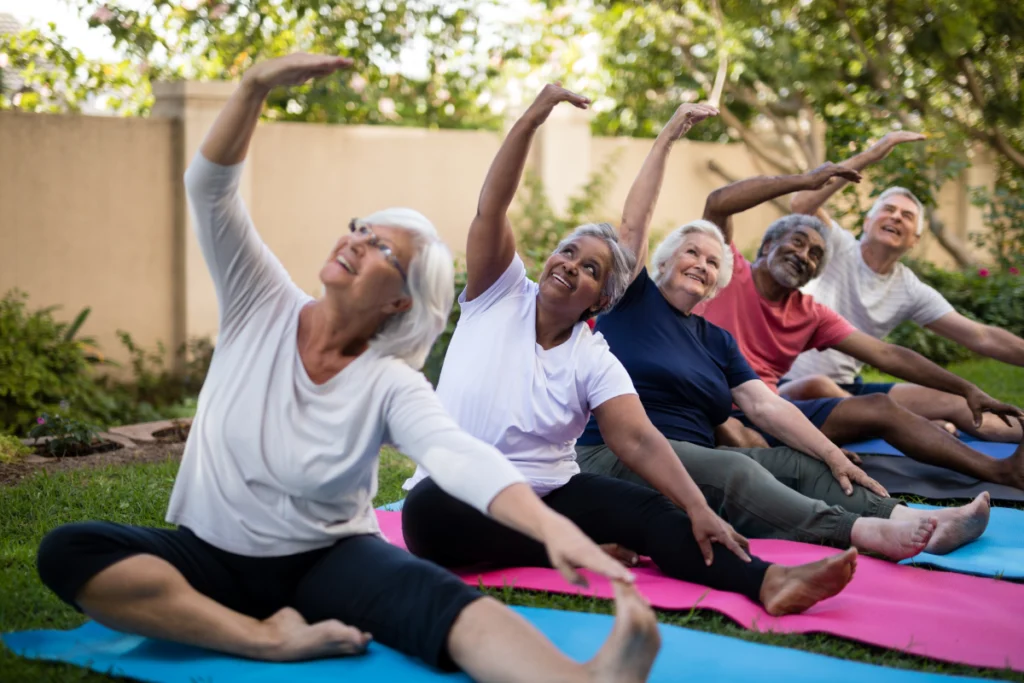
Many of these exercises can be done independently or incorporated into a group fitness class, making them accessible for seniors at any level of ability.
Flexibility Exercises
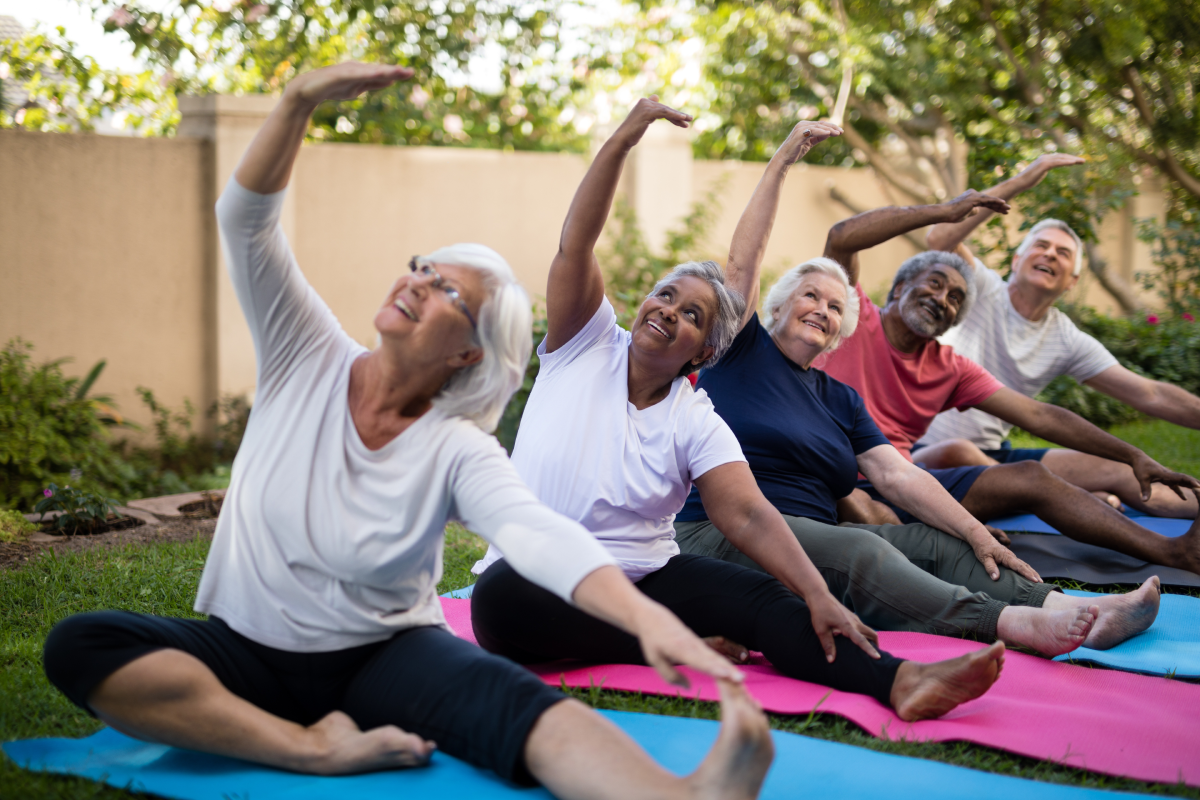
Flexibility work helps preserve range of motion, reduces stiffness, and supports recovery between more demanding activities. Stretching and yoga are the most common approaches, and both can be adapted to seated formats for seniors with limited mobility.
Low-intensity yoga, Pilates, and guided stretching routines are particularly effective when performed consistently. Even a few minutes of flexibility work daily can produce noticeable results over time.
Multicomponent Activities: Three Benefits in One
Some forms of movement cover multiple fitness categories at once. These are known as multicomponent activities, and they’re especially valuable for older adults who want to maximize limited time or energy.
Tai chi, for instance, builds strength, improves balance, and increases flexibility in a single low-impact session. Yoga offers the same combination. Gardening can serve as both light aerobic activity and muscle-strengthening work depending on the task. Group fitness classes designed for seniors often incorporate aerobic, strength, and balance elements together.
Can Seniors Exercise Too Much?
Overexertion is a real concern, particularly for older adults returning to activity after a period of inactivity or those managing chronic conditions. Signs of doing too much include persistent soreness, fatigue that doesn’t resolve with rest, dizziness, or joint pain that worsens with exercise.
Before starting a new routine, seniors should consult their physician, particularly for vigorous-intensity activities. Low-impact options such as water aerobics, walking, or yoga are often a more accessible entry point for those who haven’t been consistently active. The aim is building a sustainable habit, not a one-time push.
How The Courtyard at Loves Park Supports Active Living
Physical activities for seniors don’t happen in a vacuum. Having access to daily programming, supportive team members, and a community designed around active living makes a real difference.
At The Courtyard at Loves Park, residents have access to a range of daily activities and wellness programming designed to support independent living, assisted living, and memory care needs. Scheduled transportation makes it easy to reach local destinations, from medical appointments at nearby SwedishAmerican Hospital and Javon Bea Hospital to outings around Loves Park and the broader Rockford area.
Dining at The Courtyard at Loves Park also supports physical health. Nutritious meals provide the fuel seniors need to stay active and recover well between activity sessions.
Socialization adds another layer of benefit. Group fitness classes, walking companions, and shared wellness goals create accountability and make physical activities more sustainable over time. Research consistently shows that socially connected seniors maintain higher levels of physical activity than those who exercise alone.